Development
The Atlantic Seaboard Sub-Division: How Boutique Developments are Maximizing Plot Value in 2026
Unlock the massive ROI potential of Cape Town's Atlantic Seaboard through strategic sub-divisions. An 1100-word deep dive into 2026 property development trends.
Jan 15, 2026 · 15 min read
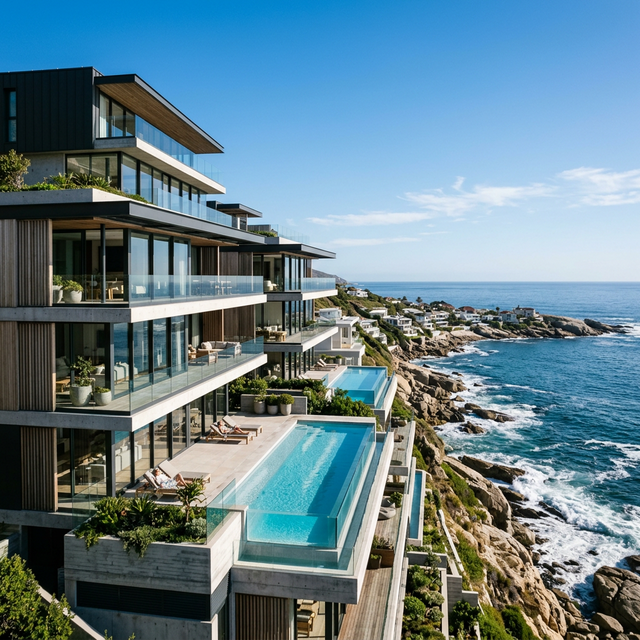
TL;DR Summary: In 2026, the Atlantic Seaboard is shifting from single-villa ownership to high-yield boutique sub-divisions. By leveraging City of Cape Town zoning shifts and 'invisible densification' architecture, property owners are tripling plot value while meeting the massive demand for secure, luxury 'lock-up-and-go' residences.
The State of the Atlantic Seaboard in 2026: A Paradigm Shift
As we enter the first quarter of 2026, the real estate landscape of Cape Town’s Atlantic Seaboard—the prestigious 'Platinum Strip' stretching from Sea Point through Bantry Bay and Clifton to Camps Bay—is witnessing a fundamental structural transformation. The days when a 1000-square-meter plot was reserved for a single sprawling villa are rapidly coming to an end. Instead, a new era of 'Boutique Densification' has arrived.
Driven by a combination of extreme land scarcity, updated municipal planning frameworks, and a surge in global 'semi-gration' at the high-net-worth level, property owners are no longer asking if they should sub-divide, but how quickly they can break ground. Happy Home Construction has been at the forefront of this shift, assisting owners in unlocking massive equity through precision engineering and luxury extensions. Our experience in transformations like the Sunset Beach Luxury Conversion has shown that vertical expansion and efficient plot use are the only ways to stay competitive in the 2026 market.
The Economics of Sub-Division: Why ROI is King
The financial logic behind sub-dividing an Atlantic Seaboard plot is undeniable. In 2026, the price per square meter in prime coastal pockets has reached record highs, making the maintenance of a single, underutilized mansion economically inefficient for many investors. By sub-dividing a traditional plot into two or even three distinct title deeds, owners are effectively multiplying their market reach. This strategy allows the owner to either sell the new unit to cover the conversion costs of the entire property or to hold both as part of a high-yield rental portfolio.
Consider the current market demand: there is a surplus of buyers looking for 'compact luxury'—units that offer 300 to 400 square meters of high-end living space with private pools and state-of-the-art security, rather than 1000 square meters of high-maintenance grounds. By developing boutique multi-unit residences, property owners can achieve a total sales price or valuation that is 40% to 60% higher than the original single-title residence. Furthermore, the 2026 tax environment in Cape Town provides specific incentives for densification in existing residential zones, further padding the bottom line for proactive developers.
Navigating the City of Cape Town’s 2026 Planning Framework
Success in 2026 requires more than just capital; it requires a sophisticated navigation of the City of Cape Town's Municipal Planning By-law. Recent amendments have prioritised transit-oriented development and closer-proximity residential densification. However, the Atlantic Seaboard remains protected by rigorous height restrictions and heritage overlays that catch many amateur developers off-guard. Understanding the nuance of PT1 and PT2 zone parking requirements is often the difference between a viable project and a rejected application.
The 2026 planning landscape favours 'Contextual Densification.' This means that the City is more likely to approve sub-divisions that maintain the streetscape's rhythm and aesthetic. Working with a team like Happy Home, which understands the intersection of comprehensive renovations and structural extensions, is critical. We ensure that the new units meet all modern setback requirements while maximizing every centimeter of the permitted build-envelope. We also facilitate the Heritage Western Cape (HWC) application process for properties older than 60 years, ensuring that modern functionality does not detract from Cape Town's architectural legacy.
Invisible Densification: The Architectural Blueprint
One of the key trends we are seeing in 2024 and 2026 is 'Invisible Densification.' This is the art of design that allows multiple luxury units to coexist on a single plot without compromising the privacy of the original owners or the character of the neighborhood. This often involves casting In Situ Concrete Slabs to create separate living levels with completely independent entrances and private outdoor spaces.
Advanced materials play a huge role here. As noted in our recent Coastal Engineering Technical Guide, using marine-grade materials and aerodynamic designs is non-negotiable on the Atlantic Seaboard. In 2026, we are integrating smart-glass facades that provide 100% privacy between units while offering unobstructed views of the Atlantic Ocean. This ensures that each sub-divided unit feels like an isolated, private villa.
Expert Insights: Learning from Recent Successes
At Happy Home Construction, we’ve seen that the most successful 2026 developments are those that don’t just 'split a plot,' but reinvent the property entirely. For instance, our Vredehoek extension work showcased how adding a modern, high-density residential layer can breathe new life into an existing structure. On the Atlantic Seaboard, this often takes the form of 'Boutique Conversions'—where an older villa is gutted and reimagined as two independent penthouse-style residences.
These projects require a multidisciplinary approach, combining bespoke cabinetry systems with heavy-duty structural engineering. The goal is always to create a 'turn-key' luxury environment that justifies the premium price point of the Bantry Bay or Sea Point zip code.
Conclusion: Is it Time to Sub-Divide?
The financial window for sub-division on the Atlantic Seaboard is wider than ever in 2026. With the right planning and a construction partner experienced in high-end, high-density residential projects, your property can transcend its current value. Whether you are looking to create a guest residence for family or a separate title for long-term investment, the boutique sub-division is undoubtedly the most effective real estate strategy of the year.
Frequently Asked Questions: Atlantic Seaboard Sub-Divisions
1. What is the typical ROI for a sub-division in Bantry Bay?
Owners often see a 35% to 55% increase in total asset value after successful sub-division and development, depending on the number of units and finish quality.
2. How long does the approval process take in 2026?
While municipal timelines have improved, property owners should budget for 9 to 14 months for the full land-use and building plan approval process.
3. Can I sub-divide a heritage property?
Yes, but it requires Heritage Western Cape approval. This is where 'Invisible Densification' design is most critical.
4. Do I need to recast the foundation for a double-storey conversion?
In many cases, yes. Our team specializes in structural reinforced-concrete upgrades to support the added weight of new luxury units.