Building
Building vs Renovating in Cape Town: Which Makes More Sense?
Should you renovate your existing Cape Town home or build new? This guide compares cost, approvals, lifestyle disruption, resale value and long-term maintenance.
May 8, 2026 · 9 min read
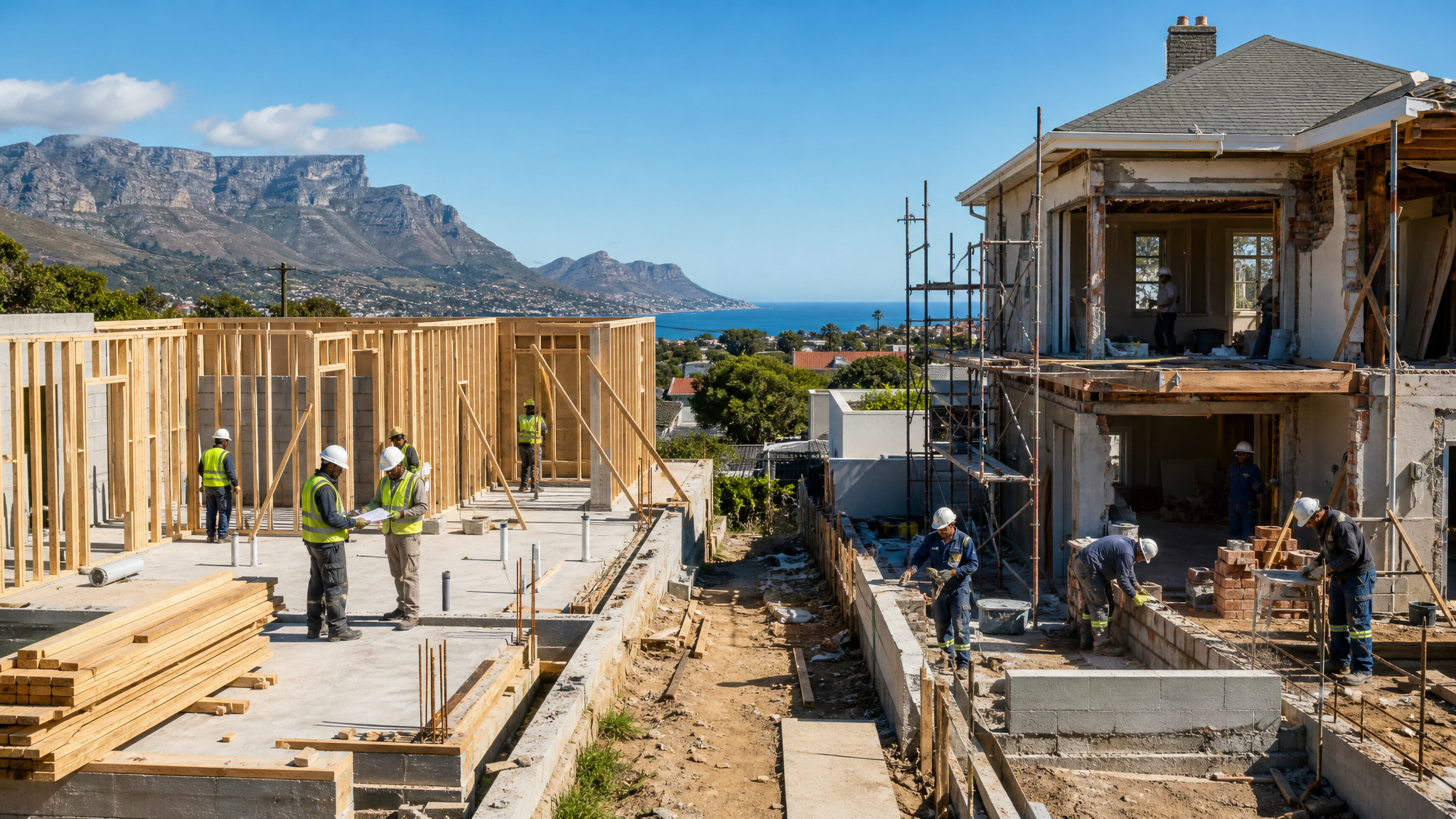
The Big Cape Town Property Question
Cape Town homeowners often reach the same crossroads: should we renovate the house we already have, or should we build something new? The answer is rarely obvious. Renovation can preserve a good location, protect established gardens, keep children close to school and improve a home without the cost of buying another property. Building new can offer a cleaner design, better orientation, modern services and fewer compromises. The right choice depends on the land, the existing structure, the family lifestyle, the approval path and the total cost of getting to the home you actually want.
The mistake is comparing renovation and new-build costs as if they solve the same problem. Renovating works best when the existing home has strong bones and the changes are clear. Building new works best when the current house blocks the site potential, has serious structural problems or would need so much alteration that little original value remains. In Cape Town, location adds another layer. A dated house in a high-demand suburb may be worth improving because the land is difficult to replace. A poor structure on a good plot may justify a more ambitious rebuild. The decision should be made with both emotion and hard construction logic.
When Renovating Usually Makes More Sense
Renovating often makes sense when the home layout is mostly workable and the project is about improving flow, finishes, light and function. A solid house with a tired kitchen, outdated bathrooms, dark living areas or underused outdoor space can often be transformed without starting again. Renovation also works well when the property has features worth keeping, such as established walls, mature landscaping, quality roof structure, generous room sizes or a character facade. In many Cape Town suburbs, these older details give a home warmth that would be expensive to recreate from scratch.
A renovation can also reduce planning risk if the work stays within the existing envelope or only adds a modest extension. That does not mean approvals are never needed, but the path may be simpler than a full new build. Families who need to control disruption may choose a phased renovation, tackling kitchens, bathrooms, living areas and exterior work in a planned sequence. This can spread cost over time, although it may increase total duration. Renovating is also useful when the homeowner wants to keep the same address and improve the home around an existing lifestyle rather than pause everything for a complete rebuild.
When Building New Becomes the Better Option
Building new starts to make more sense when the existing house fights every important goal. If the structure is badly positioned on the plot, blocks views, has poor orientation, suffers recurring damp, uses outdated services or requires major structural intervention in several areas, renovation can become a chain of compromises. A new build allows the design to respond properly to the site from the beginning. In Cape Town, that might mean capturing mountain views, protecting outdoor areas from wind, improving winter sun, creating secure parking, integrating solar readiness or designing for multi-generational living.
A new build can also be easier to future-proof. Modern insulation, glazing, roof systems, drainage, electrical layouts, plumbing routes and smart-home readiness can be planned cleanly. There is less need to work around old walls, uneven slabs or awkward ceiling spaces. The cost may be higher upfront, but the result can be more coherent and lower maintenance. Building new is especially attractive when the existing structure has limited architectural value or when the property land value is strong enough to justify a home that fully unlocks the site. The key is to model the full cost, including demolition, approvals, professional fees, service connections and landscaping.
Cost Comparison: The Number Is Not Just the Build
Renovation often appears cheaper because the structure already exists. That can be true, but only if the existing building is sound and the scope stays controlled. Once major structural changes, roof alterations, service upgrades, damp correction, new windows, full finishes and external works are added, the cost can approach a new build. New construction may have a higher headline price, but it can provide a clearer scope and fewer surprises once the design is complete. The important comparison is not cost per square metre alone. It is cost per useful outcome.
Homeowners should compare three scenarios: renovate only what is necessary, renovate to achieve the ideal layout, and build new to achieve the ideal home. Each scenario should include design fees, approvals, construction, finishes, temporary accommodation if needed, contingencies, landscaping, security and long-term maintenance. In Cape Town, site access, wind exposure, slope, soil conditions and municipal requirements can affect both options. A decision made only on a rough estimate is risky. A decision made after a site assessment and proper scope discussion is far more reliable.
Approvals, Resale Value and Long-Term Fit
Both renovation and new building can require approvals. Removing load-bearing walls, adding rooms, changing roofs, altering facades, building boundary structures or changing drainage can trigger plan requirements. New builds generally need a more complete design and approval process, but renovations can also become complex if the old house has undocumented changes or if work affects neighbours, heritage concerns or estate rules. Timeframes should include design development, engineering, municipal submission, contractor scheduling, procurement and construction.
Resale value depends on whether the work matches the market. Overcapitalising is a real risk, especially if finishes go far beyond what buyers in the area expect. Renovating can be excellent for resale when it corrects obvious weaknesses: poor kitchens, dated bathrooms, bad flow, weak outdoor living, tired paving or neglected exterior maintenance. Building new can create stronger value when the existing house is substantially below the potential of the plot. The best decision balances cost, daily function, maintenance and the buyer expectations of the suburb.
The Better Choice Is the One That Solves the Real Problem
If your existing Cape Town home has a good structure, a good location and a layout that can be improved without extreme intervention, renovation may be the smarter route. If the house is fundamentally wrong for the site, structurally tired or too compromised to support the lifestyle you want, building new may be more sensible. The next step is not guessing. It is assessing the property, defining the outcome and comparing realistic options. With the right builder involved early, the decision becomes clearer and the project starts on firmer ground.
Lifestyle Disruption During the Project
The decision is not only financial. Renovation can sometimes allow a family to remain in the home while work happens in phases, but that convenience has limits. Dust, noise, temporary loss of kitchens or bathrooms, security concerns and daily contractor access can become tiring. A full renovation of an occupied home needs careful planning around living zones, temporary services and site protection. Building new often means moving out or waiting longer before occupation, but it can also create a cleaner construction process because the contractor is not trying to protect occupied rooms at the same time.
Families should be honest about tolerance for disruption. A couple with flexible work arrangements may cope with phased renovations better than a household with small children, pets, exams or elderly relatives. If the project requires major structural work, roof removal, repeated service shutdowns or heavy demolition, temporary accommodation may be safer and faster. That cost should be included in the comparison. The cheapest construction option is not always the cheapest life option if it stretches the project, adds stress and forces expensive last-minute decisions.