Boundary Walls
Boundary Walls and Gates in Cape Town: Security, Design and Build Planning
A boundary wall or gate should improve security without hurting curb appeal. Learn how Cape Town homeowners should plan walls, gates, lighting and access before building.
Jul 10, 2026 · 8 min read
Security and Street Appeal Need to Work Together
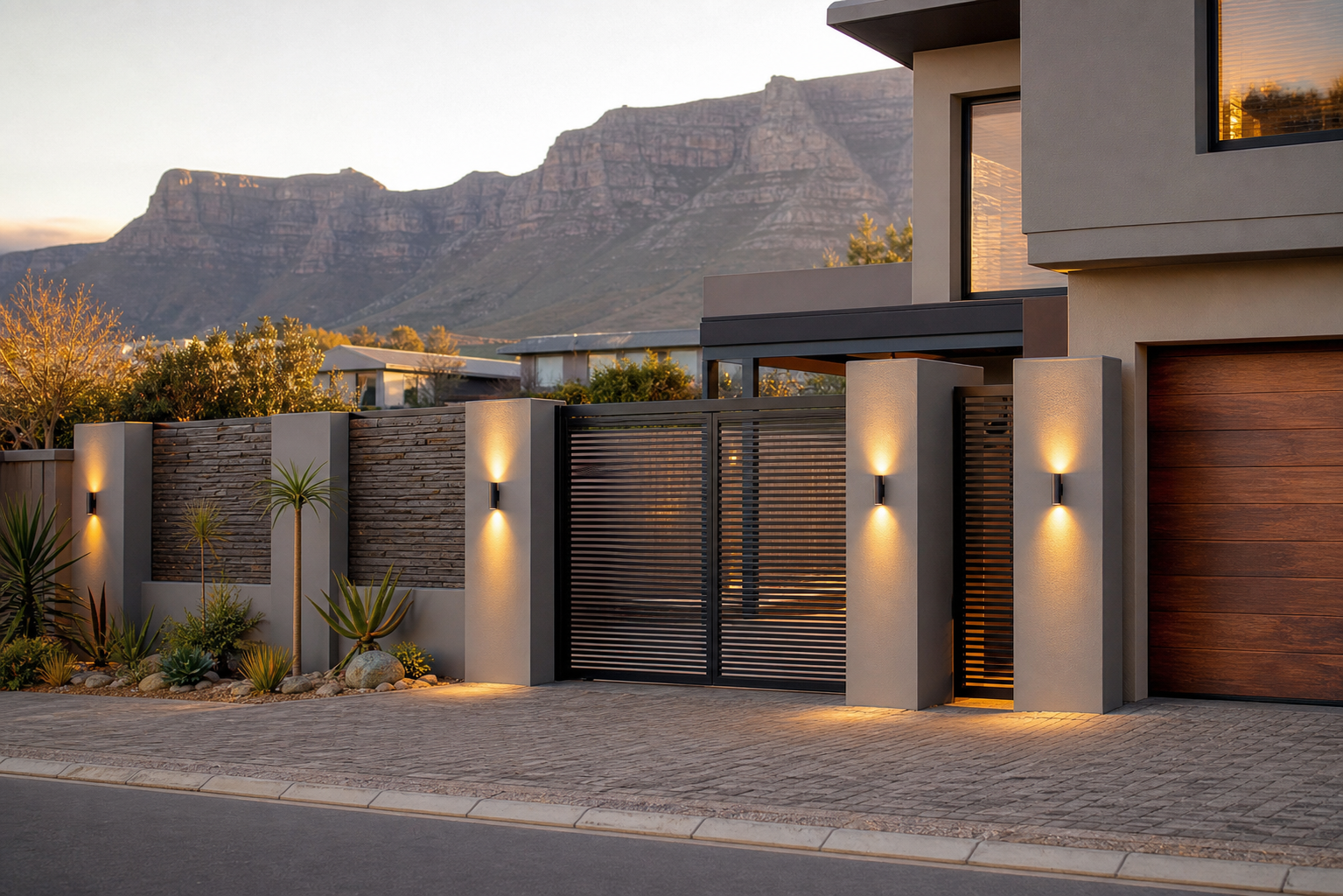
A boundary wall is often the first part of a Cape Town home that visitors, neighbours and buyers see. It also carries a serious security role. The best boundary wall and gate projects balance privacy, access control, lighting, visibility, durability and the style of the house. A wall that is secure but visually heavy can make a home feel closed off. A wall that looks good but ignores structure, drainage or gate movement can become expensive to fix.
Planning should start with the property, not a catalogue picture. Street slope, driveway width, vehicle turning, wind exposure, soil conditions, pavement levels, stormwater flow and neighbour boundaries all affect the final design. Cape Town homes vary widely, so the wall and gate solution should be fitted to the site.
What to Plan Before Building
- Wall height, privacy needs and street visibility
- Sliding or swing gate movement and motor position
- Pedestrian access, intercoms and delivery access
- Lighting, cameras and future electric fencing routes
- Drainage so water does not collect against the wall
- Finish choices that match the home and street
A good wall is not only brickwork or concrete. It is a small perimeter system. Gate posts need strength, automation needs protection, lights need wiring routes and finishes need to handle Cape weather.
Common Boundary Wall Mistakes
One common mistake is building before the gate and access plan is clear. If the opening is wrong, the gate may feel awkward every day. Another mistake is ignoring drainage. Water collecting at the base of a wall can stain finishes, weaken plaster and create long-term maintenance problems. Poor lighting placement is also common: lights added later often look messy because conduits and fixing points were not planned from the beginning.
For coastal or wind-exposed areas, material choice matters. Steelwork, hinges, fasteners and coatings should be selected with corrosion and maintenance in mind. A cheaper finish can cost more over time if it needs constant repair.
Happy Home Boundary Wall and Gate Builds
Happy Home Construction builds boundary walls and gates for Cape Town homes with security, design and construction detail in one plan. The process can include wall structure, custom steelwork, gate integration, lighting and practical access planning.
Boundary Wall and Gate FAQ
Should the gate be designed before the wall is built?
Yes. Gate size, weight, motor position and swing or slide direction affect the wall opening and posts.
Can lighting be built into a boundary wall?
Yes. It is best planned early so conduit routes and fittings look clean.
Does Happy Home build custom walls and gates?
Yes. Happy Home Construction offers boundary wall and gate services across Cape Town.
Start With the Site, Not the Wall Style
Planning boundary walls Cape Town homeowners can rely on starts with the site. The contractor needs to understand pavement level, driveway slope, stormwater movement, neighbouring walls, soil conditions, wind exposure and where vehicles will enter. A boundary wall is not just a street-facing feature; it is a structural and security element that has to work every day.
If the wall is planned separately from the gate, lighting and access system, small mistakes become daily frustrations. A driveway gate may not open comfortably, an intercom may be badly positioned, or water may collect against the wall after winter rain. These problems are easier to prevent than correct.
Security Gates and Access Planning
For security gates Cape Town homes often need more than a strong gate leaf. The gate must suit the driveway width, vehicle turning radius, motor position, power supply, pedestrian route and the way deliveries or visitors arrive. Sliding gates and swing gates each have different structural needs. The posts and wall returns must be designed for the gate weight and movement.
Lighting should also be planned early. Integrated lights can improve safety and curb appeal, but they look best when conduit routes, fixing points and switches are part of the original build. Adding them later usually creates visible surface work.
Materials, Finishes and Maintenance
Cape Town weather can be tough on exposed finishes. Coastal air, winter rain and summer wind all affect steelwork, plaster, paint, hinges and automation hardware. A responsible Cape Town boundary wall contractor should advise on coatings, drainage, corrosion protection and maintenance access.
The wall should also match the home. A very high blank wall can feel defensive, while a low decorative wall may not solve privacy or security needs. Good design balances safety, street appeal and the architecture of the property.
Questions to Ask Before Building
Ask whether engineering is needed, how foundations will be handled, whether the wall affects drainage, how the gate will be powered, where the motor will sit, how pedestrian access works and what future security upgrades can be allowed for. These questions help turn a wall into a complete perimeter plan.
Happy Home Construction builds boundary walls and gates with the full property edge in mind: structure, finish, access, lighting and long-term use.
Approvals, Neighbours and Street Lines
Boundary walls can affect neighbours, pavements, street appearance and municipal requirements. Before building, homeowners should confirm whether plans, engineering, estate permissions or neighbour communication are needed. This is especially important when changing wall height, adding heavy gates, adjusting driveway access or building near a pavement edge.
A contractor should also check where the legal boundary sits. Building in the wrong place can become a serious problem later. Existing walls are not always accurate markers, especially on older properties where changes may have happened over many years. Careful setting out protects the homeowner before concrete and brickwork begin.
Automation and Future-Proofing
Even if the first phase is only the wall, it is wise to plan for gate automation, intercoms, camera cabling, electric fencing, lighting and backup power. Running conduit early is cleaner and cheaper than chasing or surface-mounting later. Future-proofing does not mean installing every item immediately. It means leaving the property ready for sensible upgrades.
Security also depends on daily usability. If a gate is slow, awkward or unreliable, the household may stop using it properly. Motor placement, track protection, drainage and access for maintenance all affect long-term reliability. These small details make a wall and gate system feel professional.
The Finished Look Matters
A boundary wall should improve the home, not make it feel like a compound. Texture, colour, steelwork proportions, lighting temperature and planting can soften the street edge while keeping the property secure. Happy Home Construction can help balance practical security with curb appeal so the final result feels integrated with the house.
A Practical Build Sequence
A well-run wall and gate project should move through a clear sequence: site measurement, boundary confirmation, design decisions, foundation preparation, wall construction, gate post setting, steelwork or gate installation, automation planning, lighting, plastering, painting and final testing. When the sequence is clear, homeowners know when access may be affected and when vehicles need to be moved.
The final stage should include a practical handover. The gate should open smoothly, lights should work, drainage should be checked and the finish should be inspected from both the street and inside the property. Happy Home Construction focuses on this kind of complete result because boundary work is used every day, not only looked at from the pavement.