Bathroom Renovations
Bathroom Waterproofing in Cape Town Renovations: What Homeowners Need to Know
Bathroom renovations fail when waterproofing is treated as an afterthought. Learn what Cape Town homeowners should check before tiling, from falls and drains to membranes and flood testing.
Jul 3, 2026 · 8 min read
Why Waterproofing Decides the Renovation
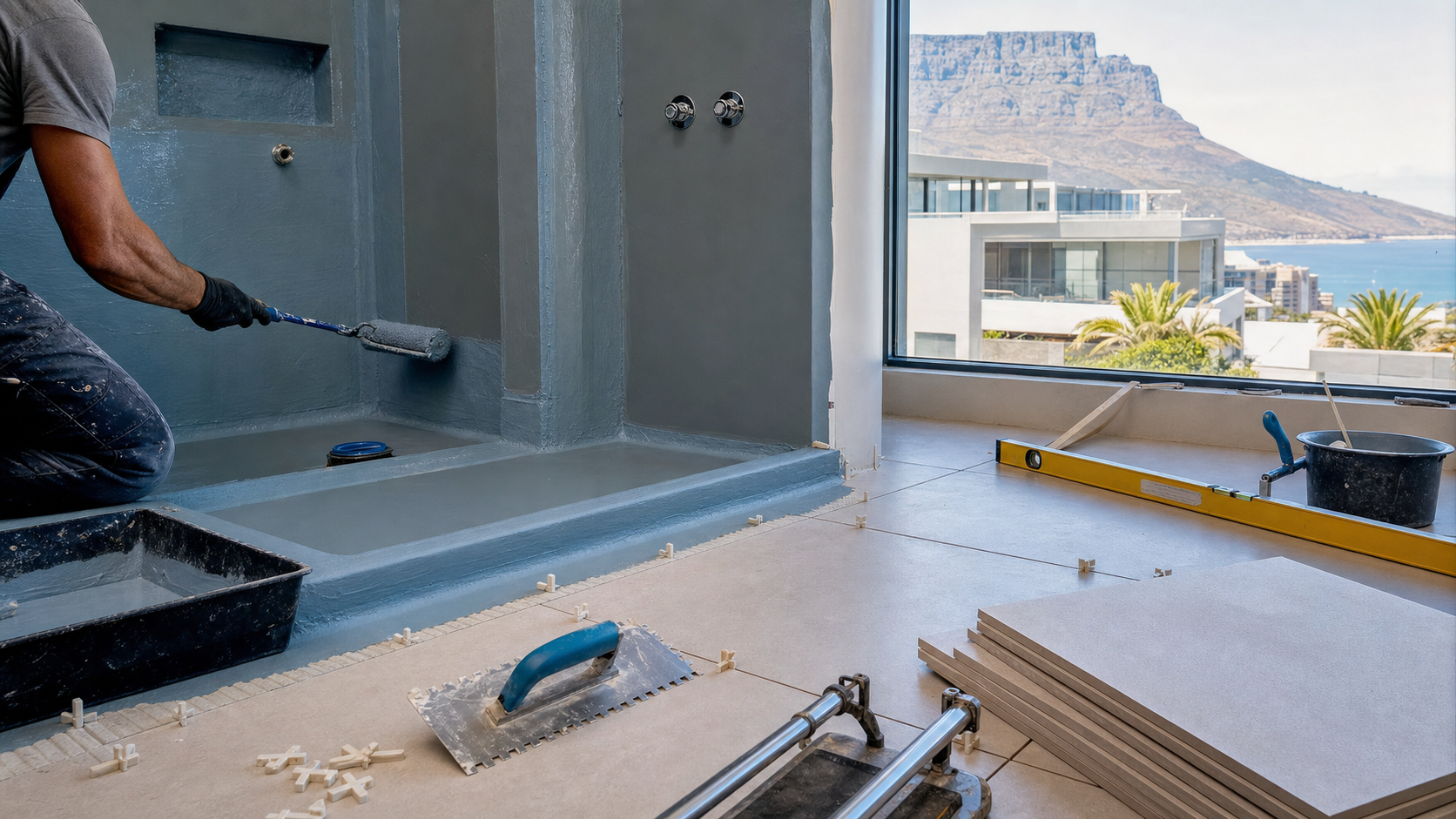
A bathroom can look beautiful on handover day and still fail if the waterproofing behind the tiles is weak. In Cape Town homes, bathrooms deal with daily moisture, winter damp, older plumbing, uneven floors and sometimes previous renovation shortcuts. Once water gets behind tiles or under screeds, the damage can spread into cupboards, ceilings, adjoining rooms and structural elements. That is why bathroom waterproofing should be treated as part of the build, not a quick product layer before tiling.
For homeowners planning a bathroom renovation, the important question is not only which tiles or taps to choose. It is whether the shower, bath surround, floor, wall junctions, pipe penetrations and drain details are being prepared correctly before the visible finishes go in. A reliable contractor should be able to explain the waterproofing sequence in plain language and show where the risk points are.
The Main Leak Risk Areas
Most bathroom leaks start at junctions and penetrations. Corners, wall-to-floor joints, shower drains, mixer points, pipe exits, bath edges and niche corners all need careful detailing. A flat waterproofing layer over a poorly prepared surface will not solve weak falls, loose screeds, cracked plaster or badly positioned outlets. The preparation needs to happen before the membrane is applied.
Falls are another common problem. Shower floors need to direct water to the drain without pooling at the edges. If the slope is wrong, water sits against grout lines and corners every day. Over time, that constant moisture finds weaknesses. Good waterproofing and good drainage work together.
What to Ask Before Tiling Starts
- Which areas will be waterproofed before tiling?
- How will corners, drains and pipe penetrations be reinforced?
- Will the shower floor have the correct fall to the drain?
- How long does the waterproofing need to cure before tiling?
- Can the wet area be tested before finishes are installed?
These questions do not make the project complicated. They make it safer. A contractor who is comfortable with wet-area renovation should expect them and answer clearly.
Cape Town Homes Need Extra Care
Many Cape Town properties have been altered over time. Older homes may hide mixed substrates, old pipework, timber floors, patched plaster or previous waterproofing failures. Coastal homes can also carry higher moisture exposure and corrosion risk. During renovation, the team should assess what is actually behind the old finishes instead of assuming the room is ready for new tiles.
Happy Home Construction handles bathroom renovations as a sequence of build decisions: demolition, substrate repair, plumbing, falls, waterproofing, tiling and final sealing. That sequence protects the finish and gives the homeowner a bathroom built for daily use.
Bathroom Waterproofing FAQ
Can tiles alone waterproof a bathroom?
No. Tiles and grout are finishes. The waterproofing layer needs to sit behind or below them.
Should waterproofing be done before tiling?
Yes. Wet-area preparation should be completed and cured before tile installation starts.
Can Happy Home help with bathroom renovations?
Yes. Happy Home Construction offers bathroom renovation services across Cape Town, including layout, waterproofing, tiling and finishes.
The Correct Bathroom Waterproofing Sequence
A successful bathroom waterproofing Cape Town project starts long before the tiles are installed. The room needs to be stripped properly, loose material removed, plumbing positions checked, floors assessed and wall surfaces prepared. If the substrate is cracked, dusty, hollow or uneven, the waterproofing layer cannot perform as expected. Good contractors treat waterproofing as a system rather than a single product.
The usual sequence is demolition, repair, plumbing rough-in, falls to waste, substrate preparation, priming, membrane or coating application, curing, testing and then tiling. Skipping steps may save a day during construction but can create years of leaks and damp. This is why a homeowner should ask how the wet area will be prepared before accepting a bathroom renovation quote.
Shower Waterproofing Details That Matter
Cape Town shower waterproofing needs special attention around drains, wall corners, niches, mixer points and glass screen junctions. These are the points where water pressure, movement and daily use expose weak workmanship. Reinforcing corners and pipe penetrations is usually more important than applying a quick flat coat across the middle of a wall.
Falls are just as important. A shower floor that does not drain properly leaves standing water against grout and silicone lines. Over time, that moisture tests every weak point. A well-built shower should move water toward the drain naturally, without relying on constant wiping or luck.
Budgeting for Bathroom Renovation Waterproofing
Homeowners sometimes focus on visible finishes because tiles, taps and vanities are easier to compare. But bathroom renovation waterproofing is one of the areas where cutting cost can become expensive later. A failed wet area may require tile removal, plumbing access, ceiling repairs, repainting, mould treatment and replacement finishes.
A good quote should explain what is included: demolition, substrate repair, waterproofing products, curing time, testing, tiling and final sealing. If a quote is much cheaper than the others, check whether waterproofing is fully specified or simply assumed. The cheapest bathroom is rarely cheap if it has to be opened again.
Protecting the Bathroom After Renovation
Even a well-waterproofed bathroom needs sensible use and maintenance. Silicone joints should be checked, extractor fans should be used, and leaks around taps or wastes should be fixed early. Grout is not a waterproofing system, so cracks or movement should be inspected instead of ignored.
Happy Home Construction approaches bathroom renovations with wet-area performance in mind. The finished room should look good, but it also needs to handle daily showers, Cape Town winters and long-term family use.
Quote Checks Before You Approve the Bathroom
Before approving a bathroom quote, ask the contractor to separate visible finishes from hidden preparation. Tiles, taps and vanities are easy to see, but the real protection sits behind them. The quote should make it clear who is responsible for demolition, substrate repair, plumbing preparation, waterproofing, curing time, testing, tiling and final sealing. If waterproofing is only mentioned as a vague line item, ask for more detail.
A strong quote also explains assumptions. For example, it should say what happens if old plumbing is damaged, if the floor needs levelling, if walls are hollow, or if previous waterproofing has failed. These are common renovation realities in existing Cape Town homes. A transparent allowance is better than a cheap quote that becomes expensive once the bathroom is open.
Red Flags During a Bathroom Renovation
Homeowners do not need to manage the contractor, but they should know the warning signs. Tiling too soon after waterproofing, ignoring shower falls, leaving pipe penetrations unsealed, using silicone as the main waterproofing solution, or rushing over cracked surfaces can all create risk. If the room smells damp after demolition, that should be investigated before new finishes go in.
Another red flag is poor communication around curing time. Waterproofing products need time to cure before tiling. If every step is rushed into one day without explanation, the homeowner should ask how the system is being protected. Good workmanship often looks slower at the hidden stages because the contractor is giving the room time to perform properly.
Why Happy Home Treats Wet Areas Carefully
Happy Home Construction approaches bathroom renovations as long-term building work, not surface styling. The bathroom must handle steam, daily water, cleaning products, family use and seasonal moisture. When the waterproofing is planned correctly, the finishes have a much better chance of lasting. That is the difference between a bathroom that looks new for a few months and a bathroom that remains practical for years.